
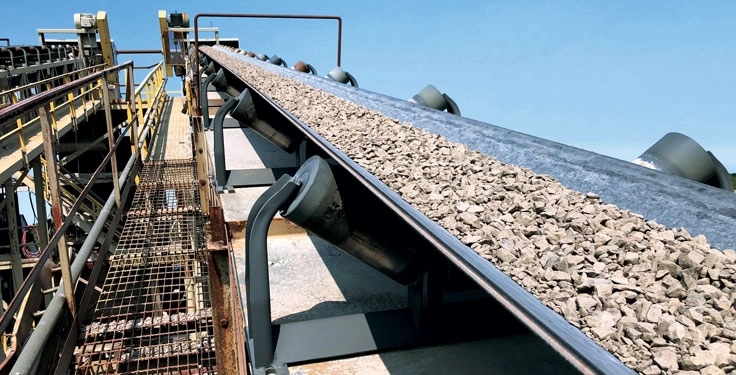

The conveyor market has made substantial progress in areas such as machine guarding, lockout/tagout procedures, safer maintenance access points and methods, and fall protection systems.

However, even with these advancements, incidents involving entanglement with rotating equipment, falls, loose material hazards and unsafe maintenance practices continue to occur across many facilities. In many cases, these incidents may not be caused by a lack of safety equipment, but by complacency, limited situational awareness or the practical challenges associated with maintaining equipment that must periodically operate during adjustment or inspection.
Recognizing these realities is critical to developing safer maintenance practices and reducing risk exposure for personnel working around conveyors.
There are several key safety considerations operations should take when it comes to conveyor maintenance, including guarding strategies, maintaining equipment during operation, fall protection and the importance of situational awareness in complex conveying environments.
Equipment guarding
One of the simplest ways to prevent injury around moving equipment, especially rotating equipment, is through guarding. This can be done in many ways, depending on the site requirements and product types. But there is a strong need for individual component guards or contact prevention.
Protection around overhead components is a key consideration whenever personnel may be operating below equipment. This can include products to prevent equipment from falling in the event of failure (ie. chains, roll catchers, pans) or products to prevent access during operation (ie. pinch-point mitigation, 360-degree covers).
Maintaining equipment
For conveying operations, working with moving belts is part of the job. One difficult maintenance task every plant must perform is belt tracking, which involves running the conveyor to check for issues. Belt tracking requires finesse and experience to find the ideal position for the belt training components. While one of the simplest ways to keep a belt tracked is with a crowned pulley, this alone often will not do the job.
Typically, longer conveyors use various training idlers that can operate without intervention, but a longstanding method for belt training is idler “knocking,” or adjustment of the idler frame. These idlers should be adjusted while the conveyor is shut down, but after each adjustment, the conveyor must be restarted to measure the effect.
During this process, it’s critical to keep a safe distance from the belt, acknowledging that guarding may not be present between the operator and the belt.
It can be easy to become complacent during these operations and neglect the extreme risks posed by the rotating components involved. The best way to mitigate these concerns is to use products that naturally keep the operator away from the rotating equipment.
This can be done with idler adjustment devices, which are maintenance-free or require minimal monitoring.
Fall protection
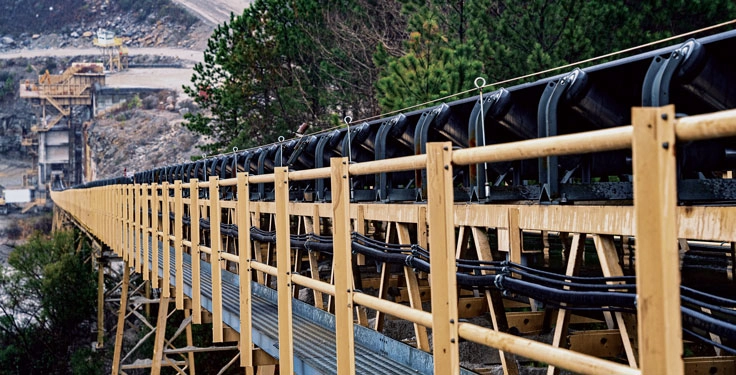
Injuries from falls remain common but can also be easily overlooked. It can be easier when working at a facility to find yourself needing to move around existing safety railings or guards, which are there to protect you.
When this happens, it’s critical to already have a plan to protect yourself in the event of a fall. On a conveyor, this may mean climbing over railings or onto a structure.
When this happens, it’s important to use the proper personal fall protection. Sometimes these situations require time to find proper tie-off points if a restraining device is used. These are often available but may require extra straps or other devices to properly connect to.
This may seem like a waste of time in the moment, especially when you are trying to complete a quick task, but it is a critical, potentially lifesaving step.
Situational awareness
Many facilities have conveyors near each other, causing what can look like a steel jungle of beams, wires and materials.
These areas can be especially dangerous during maintenance or inspections. Operators may be working near multiple conveyors at any given time, and a misplaced hand or foot could put them in an unsafe situation.
It’s important to maintain awareness of what’s happening around you and keep in mind: Where are the other conveyor loading areas? Are they guarded? Are there any moving pieces of equipment around me, such as trucks, that may be loading or unloading? Is there spillage on any conveyors that could harm me, and am I wearing the proper PPE to protect myself?
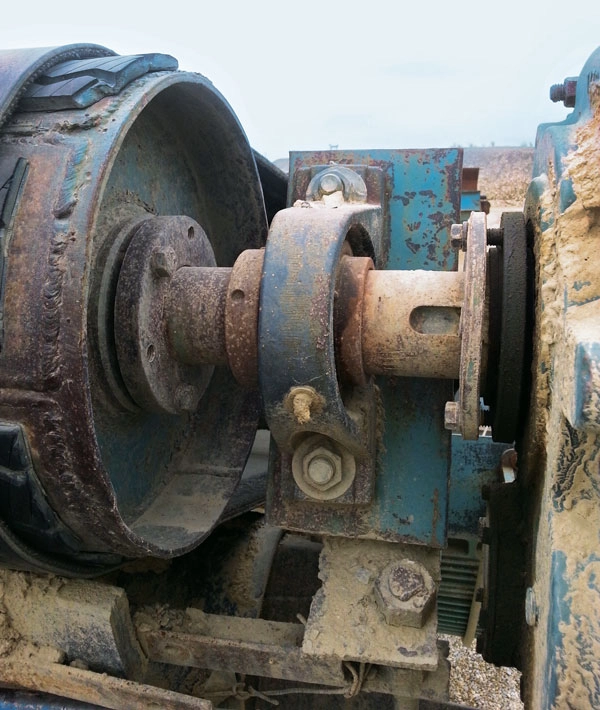
Being aware of the equipment’s condition is also important. When working with corrosive materials or in corrosive environments such as ocean spray, having a working understanding of how rust can affect the structural integrity of different aspects of the conveyor is important.
When replacing wear components such as idlers or pulley lagging, it may be necessary to evaluate the mounting points, as well as the components themselves. When removing old components, keep an eye out for any damage that can affect how the part moves during transit. It is not uncommon for idler frames to be damaged, and if this isn’t noted before loosening the component, the part may break further or move in ways not typically expected, causing injury.
Jeff Ellis is vice president of engineering at PPI.
Related: Safer screen media changeouts