

Earlier this year, Portable Plants sat down with Anirban Basu, CEO of Sage Policy Group and chief economist during the Associated Builders & Contractors, during the Texas Aggregates & Concrete Association’s 72nd Annual Meeting. Basu offered insights into the construction economy, providing a sector-by-sector breakdown and sharing his thoughts on the booming data center market. This conversation was edited for brevity and clarity.
Portable Plants: At the midpoint of the year, what’s the temperature of the construction industry economy, in your opinion?

Basu: It’s interesting you ask it that way – temperature. In some ways, the economy is overheating, and so is the construction segment in the U.S. By that, I mean costs are rising, yet we see a fair amount of activity economy-wide and in construction.
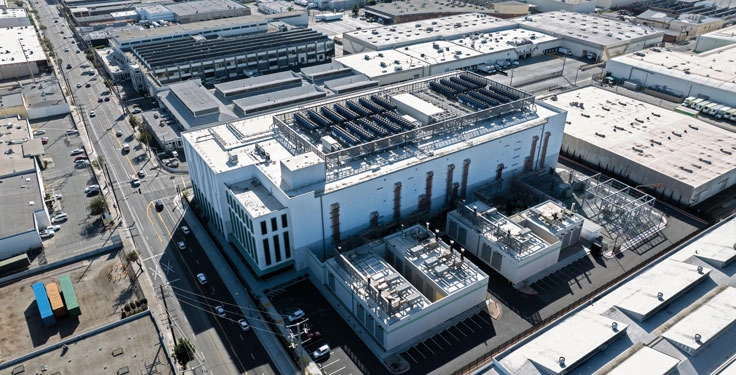
Obviously, the most visible segment driving demand for construction services is data centers. We’re in the middle of an AI-investment super cycle, but there are implications for that. Because data centers use a ton of electricity, another area we’re seeing a lot of investment, or upcoming investment, in is energy generation distribution projects. Those two segments – data centers and energy generation – stand to be the two strongest segments going forward.
We also have a fair amount of public spending – namely, on infrastructure – that affects demand for aggregates and concrete. We still have money coming in from the Infrastructure Investment & Jobs Act (IIJA), and though the authorization for that package ends on Sept. 30 this year, the funds remain available for spending. The Trump administration obviously has different priorities from the Biden administration, so there has been some interruption of certain projects. Nonetheless, the money is there, and we see a fair amount of infrastructure spending in this country.
You look at other segments of construction, and things are totally different. Interest rates are too high, materials prices are too high, and the cost of construction labor has gone up, perhaps, in part, because of shifting immigration policy. But this is a part of American life. We don’t have enough skilled construction workers.
You put it all together, and there are some segments that are overheating, with a lot of activity and very expensive construction underway, and other segments that are actually quite cool.
Portable Plants: We’ve been seeing and hearing a lot about the demand for data centers, and it seems to just keep growing. What are your observations of the current market for data centers?
Basu: Demand for data centers is not slowing down anytime soon. The demand is being driven by the so-called ‘hyperscaler’ companies like Amazon, Alphabet, Meta and Microsoft. In the aggregate, those companies spent around $400 to $450 billion on artificial intelligence infrastructure and architecture last year. The estimate for this year is between $700 and $725 billion. That could add more than a full percentage point gross domestic product.
Portable Plants: Outside of data centers, how would you describe the health of the nonresidential sector?
Basu: I would say the nonresidential sector is not healthy in general, apart from data centers and a handful of other segments. Why is that? I think you’ll find many contractors experiencing declining backlogs. They’re working through their project portfolio and it’s hard for them to get new work.
One thing I hear constantly from contractors, at least those who do not work on data centers, is that bidding lists have gotten longer. Where they used to compete against three, four, or five firms, now there are 10 to 15 others. That, of course, is bad for firm margins because, to win, that means you have to bid that much more aggressively and reduce margins aggressively.
The hyperscalers throw up so much free cash flow, they’re less interest-rate sensitive and they’re, of course, competing for a global dominion in artificial intelligence. Nothing is more valuable in this world, financially, one could argue, than global dominion in artificial intelligence. They’re chasing profitability, so they’ll spend whatever they need to.
Portable Plants: Looking at the nonbuilding sector, what do you expect once the IIJA expires?
Basu: At some point, the Trump administration is going to have to reauthorize infrastructure, and it’s very unclear what we’re going to get out of that process. The administration has given us some clues, however. They want a smaller federal role in infrastructure and they want state and local governments to take on more responsibility for infrastructure.
That’s much different from the Biden administration’s approach, which had the federal government take the lead. Now, we have a $39 trillion national debt and the interest on the debt is more than a trillion dollars. At some point, the federal government will probably have to pull back on infrastructure spending.
The problem with state and local governments increasing their involvement in infrastructure is that many of those governments are not in great financial shape. What’s going to happen is a big emphasis on public-private partnerships because capital is no longer in the public sector. Public-private partnerships will be needed to bring sufficient capital to infrastructure.
Portable Plants: Over the last 12 to 18 months, the residential sector has been a roller coaster. Where do things stand right now, looking at single- and multifamily?
Basu: It’s pretty weak based on leading economic indicators, such as residential building permits. Looking at the multifamily segment, specifically apartment construction deals, those projects are not penciling in from a pro forma perspective. Project financing costs are high because interest rates are stubbornly elevated – they’ve actually risen recently – and materials prices are high, in part, because of tariffs, perhaps. Now, of course, we have the conflict in the Middle East, which has raised the price of diesel fuel and other inputs into construction.
In certain parts of the country, markets became saturated with new construction. It takes a while to lease these apartment buildings, even with a red-hot economy. You see this in places like Austin, Texas; Denver, Colorado; Tampa, Florida; and Nashville, Tennessee. Rents are no longer rising as they had been because of this new supply. It’s hard to make these deals work. Because of all of this, multifamily stands out as one of the segments that has really weakened.
Here’s the good news: It’s going to come back. We know there is a housing shortage in America and housing has become quite unaffordable to many Americans. So, we need more supply at some point. We’ll get it, but we’re going to need lower interest rates and lower materials prices at some point to get there.
Portable Plants: Taking all of this into consideration, what are your expectations for the rest of 2026 and into 2027?
Basu: I predict that certain segments will actually get weaker going forward. Here’s why: Coming into this year, the expectation was that the Federal Reserve would cut interest rates two or three times. Interest rates coming into the year were quite high, relative to where they were, say, pre-pandemic. Now, given the surge in inflation, interest rates are set to rise. The Fed may start raising rates later this year, perhaps in December, and then raise them twice more in 2027. So, instead of getting a 75-basis-point reduction in interest rates, you might see them move in the other direction. For interest-rate-sensitive segments, that’s really bad news because project owners are having a tough time getting those projects financed in the first place. So, a lot of these projects would become even less likely going forward because of these higher borrowing costs.